
Workplace Ethics Workshop
For Healthcare students
How might unconscious bias affect how you support colleagues in the workplace? How might it impact on patient care? How can you limit the impacts of your own, or others’ bias in the workplace?
Join students from a range of healthcare programmes to explore how unconscious bias impacts patient care and workplace experiences. Through interactive scenarios, you will examine ethical challenges beyond those typically covered in healthcare courses, gain experience working in multidisciplinary teams, and build confidence in real world decision making.
Dates for 2026/27
On-campus Workplace Ethics Workshops
- Friday 19 February 2027
- Friday 26 February 2027
You only need to attend one workshop.
Time: 10:00 am to 12:00 pm
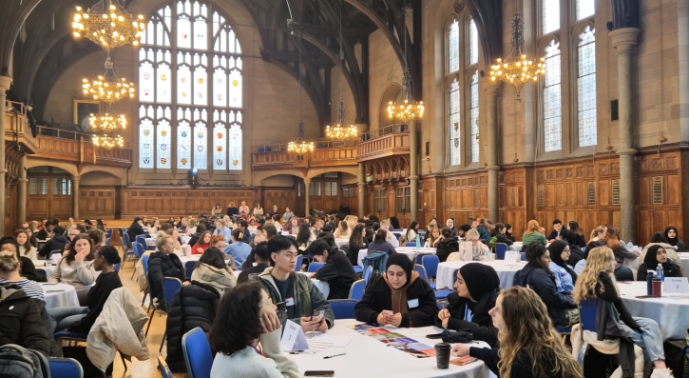
Location: Whitworth Hall, The University of Manchester
Interactive case studies will explore the impacts of diagnostic overshadowing on patient care.
You will be challenged to consider your own ethical practice in the workplace. You will also have the opportunity to draw on your own experience to contribute to discussion and debate with a diverse group of healthcare practitioners.
This workshop is for you if you are planning to work in a healthcare profession and has been developed in partnership with practitioners from a range of healthcare professions.
You might also find the workshop interesting if you’re interested in working or volunteering with vulnerable adults or people with disabilities, in a support, advocacy or caring roles.
The workshop is available to year 3+ undergraduate students at The University of Manchester only.
The workshop offers an opportunity to challenge yourself, learn about the impacts of unconscious bias in healthcare settings, and explore your own ethical decision-making, in a constructive learning environment, supported by real-world practitioners.
Taking part will also improve your employability by providing you with insights and experiences you can draw on in job applications and interviews. You will also gain valuable experience of working and making decisions, in multi-disciplinary groups.
Attendance at the workshop will be listed on your HEAR (Higher Education Achievement Report).
Completing a Workplace Ethics Workshop also counts towards the Stellify Award.
If you are a final year student in one of the programmes listed below you have been pre-registered and will receive an email from your programme with joining instructions towards the start of Semester 2.
- Pharmacy
- Optometry
- Midwifery
- Nursing
- Audiology (first year students)
- Speech & Language Therapy
If you're studying another course and would like to attend this workshop, complete the form linked here and a member of the team will be in touch.
The workshop is delivered by the UCIL and Education Development teams at The University of Manchester.
This workshop has been developed in partnership with:
The Downs Syndrome Association and members of their Our Voice Network, a network of hundreds of people who have Down’s syndrome who live in England, Wales and Northern Ireland.
Hijinx, one of Europe’s leading inclusive theatre companies, creating outstanding performances with learning disabled and/or autistic artists on stage and on screen, for Wales and for the world.
Leading academics and practitioners from a range of healthcare professions and leading researchers in equality in the workplace, including:
Professor Chris Cutts: Director of the Centre for Pharmacy Postgraduate Education
Dr Christine Rogers: Reader in Psychology & Deputy Associate Dean for Student Experience
Fiona Kevan: Director of UG Education, Speech & Language Therapy & Audiology
Karen Barker: Senior Lecturer, Midwifery, School of Nursing, Midwifery & Social Work
Dr Ruth Bromley: Lead for Ethics & Law, School of Medical Sciences
Dr Victoria Silkstone: Lead, Community Based Practice, Pharmacy
Students from the University of Manchester gave written and verbal feedback and participated in focus groups to help shape the content of this workshop.
Workshop impact
- 84% of students say they are more aware of their ethical responsibilities after taking part*
- 86% gained insight into the ethical challenges faced by other healthcare professions through interdisciplinary group work*
*Based on feedback from over 500 students.
What students say
- “Working with students from other disciplines gives real insight into different roles and the ethical challenges facing multi-disciplinary teams.”
- “Thought-provoking scenarios that made me think: what would I do in this situation?”
- “Interesting, challenging topics with valuable discussion and diverse perspectives.”
- “A supportive environment where I felt comfortable sharing my views.”